Weekly site cleaning, keeping projects on schedule without incurring finish-work delays
25/09/2025 by
admin
Weekly Site Cleaning: keeping projects on track
In construction, adhering to schedules is not just important, it’s vital. Any delay in a project can lead to increased costs and dissatisfied clients, underscoring the significance of timely project completion.
It’s so easy to forget site cleaning. A clean site is not only about looking tidy; it helps the workflow to flow smoothly and keeps everyone safe.

Carrying out weekly cleaning prevents minor problems from becoming big issues and setbacks. When debris is cleared away and spaces are kept open, workers can finish their tasks without unnecessary hold-ups.
Effective cleaning is not just about sweeping floors; it’s about teamwork, planning, and regular checks to ensure that standards are consistently met. This emphasis on collective effort reinforces the importance of everyone’s contribution in maintaining a clean and safe work environment.
When cleaning is done well, projects run more smoothly, safety improves, and work is finished on time.
Why Site Cleaning Matters for Project Timelines
With clean sites, it’s easy on the workers. They can move freely, tools are where they should be, and there are fewer risks of accidents.
Weekly site cleaning stops rubbish from piling up and reduces hazards that could ultimately lead to more bills. This keeps projects running to plan and shows care for safety.

Some of the main benefits of efficient cleaning include:
- There are lower rates of accidents and injuries
- Clearer walkways and better access to tools
- Less wasted time looking for misplaced items
Regular inspections demonstrate a commitment to safety, adherence to regulations, ensuring the quality of services, and maintaining high standards. A well-kept site reflects professionalism and helps maintain team morale.
Common Causes of Finish-Work Delays: Poor upkeep and how it delays finish work
When sites are not looked after, delays creep in quietly. Dust and waste pile up quickly if not managed, tools get misplaced, and walkways become blocked, causing a delay in completion.
This not only slows down the job but can also break safety rules, which may even lead to work being stopped.
Proactive site management, such as regular cleaning, is a simple way to avoid these issues and keep the project on track.
The Role of Weekly Cleaning Schedules
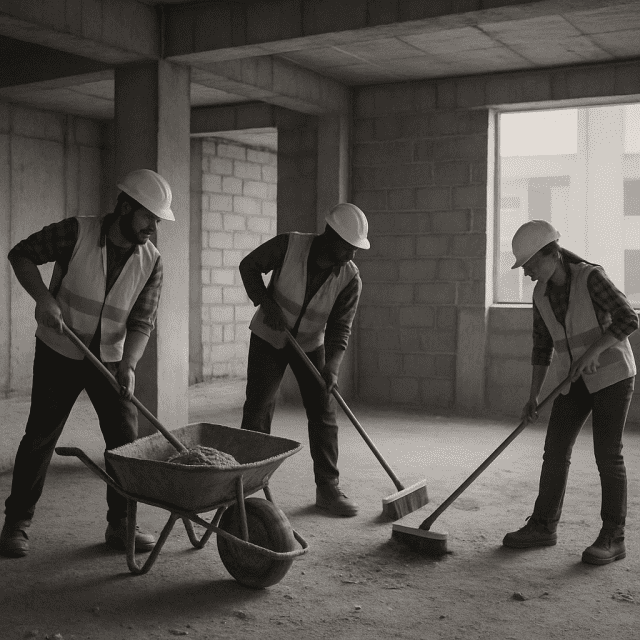
Weekly cleaning schedules are the backbone of good site management. They keep things in order by ensuring that dirt and debris do not pile up, thereby preventing problems from building up.
By making cleaning a part of the routine, sites stay organised, workers stay safer, and projects move forward without unnecessary interruptions.
Benefits of planned weekly cleaning include:
- Fewer accidents
- Better compliance with safety standards
- A tidier, more organised site
When cleaning is prioritised, everyone understands its value, ensures accountability, and contributes to keeping the site in shape.
Key Cleaning Techniques for Better Results
Simple methods can make cleaning far more effective. One helpful approach is working from the top down. Clean higher areas first, like ceilings and walls, so dust and debris don’t fall onto already cleaned surfaces.
High-traffic areas should be prioritised, as they collect the most dirt and clutter, which impacts both safety and efficiency.

Other useful tips include:
- Using microfibre cloths for dusting to reduce allergens
- Choosing vacuums with HEPA filters for cleaner air
- Colour-coding tools to avoid cross-contamination
Teamwork is just as important as technique. Make sure everyone understands cleaning protocols and takes responsibility.
Time management is vital to site cleaning. Designate specific times for cleaning tasks to keep the site orderly.
You should also incorporate these additional practices:
- Schedule regular reviews to update cleaning protocols
- Use task checklists to track cleaning progress
- Encourage feedback from staff for continuous improvement
Making Cleaning Tasks More Efficient
Cleaning can take up a lot of time if it isn’t well organised. Simple steps can help:
- Plan and prioritise what needs to be done first
- Group similar tasks together, such as dusting, then vacuuming, then mopping.
- Set aside specific time blocks for cleaning to avoid distractions.
Digital tools such as task apps can also help keep everyone on the same page. Rotating tasks among workers can keep interest up and avoid fatigue.
Schedule demanding tasks during peak energy times for best performance. This saves energy and ensures lots of functions are achieved over time.
Tools, Technology, and Training
It is essential to use the right tools and technology. Modern equipment like industrial vacuums or power washers saves time and gives better results. Software can also help schedule and track cleaning tasks.
Just as important is training. Workers who know the proper techniques work more quickly and safely. Regular training updates keep standards high.
The best results come when good tools and proper training are combined. This reduces fatigue, improves safety, and supports a healthier workplace.
Making Cleaning Part of Site Management
Cleaning should not be treated as a separate task but as part of overall site management.
It is important that you give proper attention to cleaning by having clear plans, regular discussions in project meetings, and assigning roles for cleaning.
Your steps can simply look like this:
- For every project milestone, there should be a cleaning schedule.
- Discuss cleaning needs during planning meetings
- Assign dedicated roles for site cleaning coordination
With a simple task such as cleanliness, it creates a sense of ownership and accountability across the whole team due to constant communication.
Measuring and Improving Cleaning Efficiency: KPIs and Continuous Improvement
To keep improving, cleaning needs to be measured using specific metrics and practices. Simple checks can be used to get quantitative insights, such as:
- How long does each task take
- How often are tasks completed?
- Whether accident rates drop after cleaning
Reviewing these results constantly and consistently through talking with your staff helps refine the process. A simple conversation with your cleaning staff will give you great insights into what’s been done and how best to improve. A culture of continuous improvement keeps standards rising.
Building a Culture of Cleanliness
When cleanliness is valued, it becomes part of the site’s culture. Clear responsibilities, open communication, and recognition for good work all help.
Workers feel more motivated when their efforts are noticed. Regular training and reward systems not only reinforce this sense of pride but also make the team feel valued and appreciated for their contribution to maintaining a clean and safe work environment.
A clean site is not just safer and more efficient; it also instills a sense of pride and accomplishment in the team. It shows commitment to quality and professionalism, and it’s a reflection of the team’s hard work and dedication.
Conclusion
Weekly site cleaning is an investment that pays off when you work with Archway Facilities. It prevents costly delays, keeps projects safe, and supports timely delivery.
Weekly site cleaning not only prevents costly delays and keeps projects safe, but it also saves money by protecting tools and materials. This comprehensive approach leaves a good impression on clients and reassures them of the project’s quality and professionalism.
A clean site speaks of pride, professionalism, and care. Making weekly cleaning a priority is one of the simplest ways to secure project success.